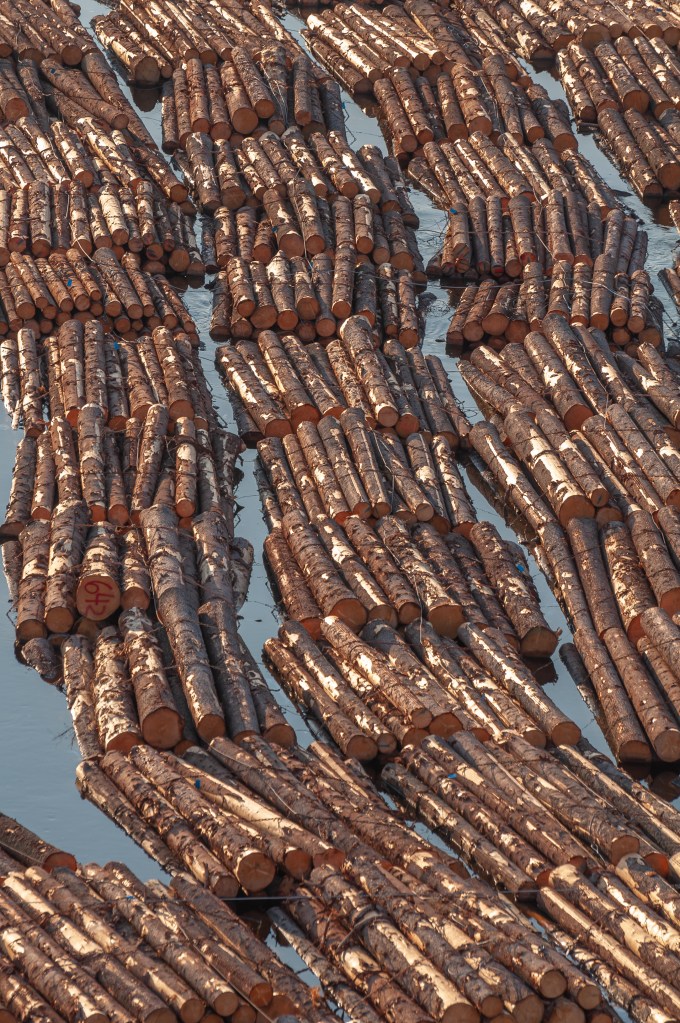
Deadhead logs are the submerged remnants of timber harvested during historic logging operations and have become highly valued by the specialty lumber industry due to their dense, well-preserved heartwood.
During the nineteenth and early twentieth centuries, vast quantities of timber were harvested and transported via rivers, supplying wood for major construction projects, including great landmarks such as Grand Central Station and the original Yankee Stadium (Kenny 2000).
In the course of transport, ~10% of logs, dense, resin-rich “sinkers”, became waterlogged and sank to the bottom, where they remained preserved in anoxic conditions. In some cases, logs were intentionally stored underwater to prevent rot (Oliverio 2024).
Renowned demand for this material led to the reinstatement of deadhead logging in Florida in 1998 after 25-year ban; however, regulatory frameworks governing this practice were largely designed for river systems and failed to adequately account for the ecological complexity of lake environments (Gallagher 2000).
As a result, permitted logging operations at Lake Pithlachocco caused significant damage to both ecological and cultural resources. These impacts were exacerbated by the lack of comprehensive biological surveys prior to permitting, as well as insufficient coordination among state agencies (Gallagher 2000). Debates surrounding deadhead logging reveal competing interpretations of ecological value and management.
The Case
Proponents argue that submerged logs are unnatural features of river and lake systems, having originated from upland forests, and that their removal is environmentally benign or even beneficial. They further contend that regulated logging can reduce illegal and unmonitored extraction while decreasing pressure on standing forests.
Opponents, however, emphasize that these logs have become integral components of aquatic ecosystems, providing habitat structure and supporting diverse biological communities. Critics also point to inconsistent enforcement and insufficient environmental review, arguing that state oversight has failed to adequately protect both ecological resources and cultural heritage.
Empirical observations suggest that these logs indeed host diverse biological communities, and their removal may have cascading ecological effects (Gallagher 2000; Oliverio 2024).
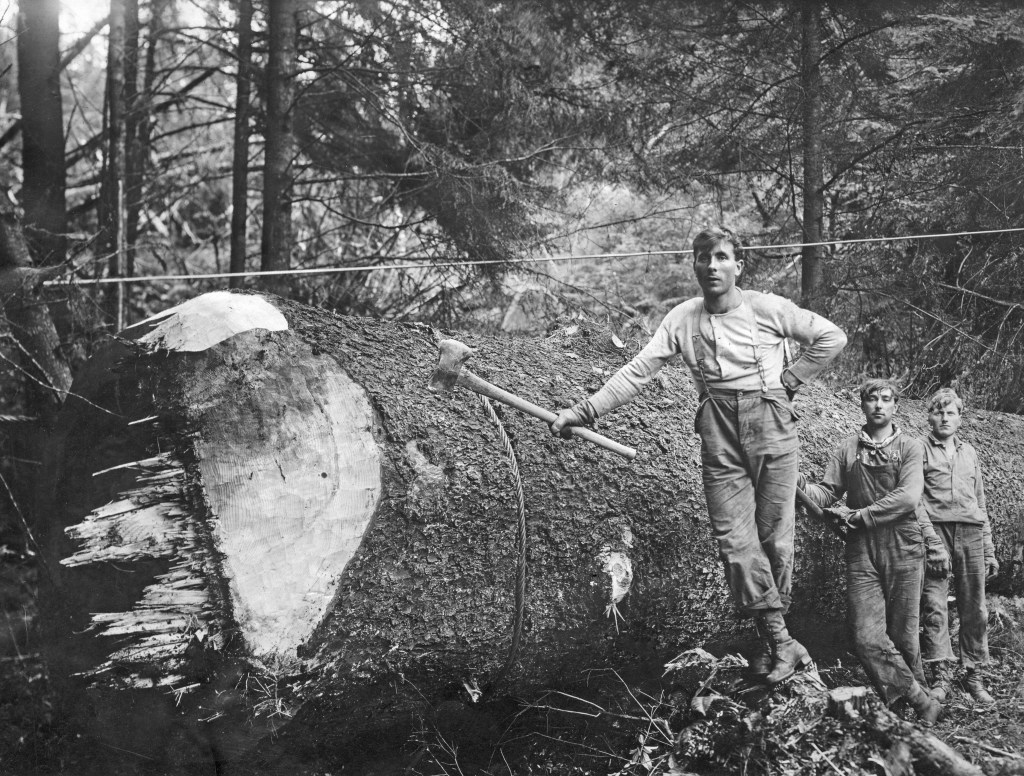
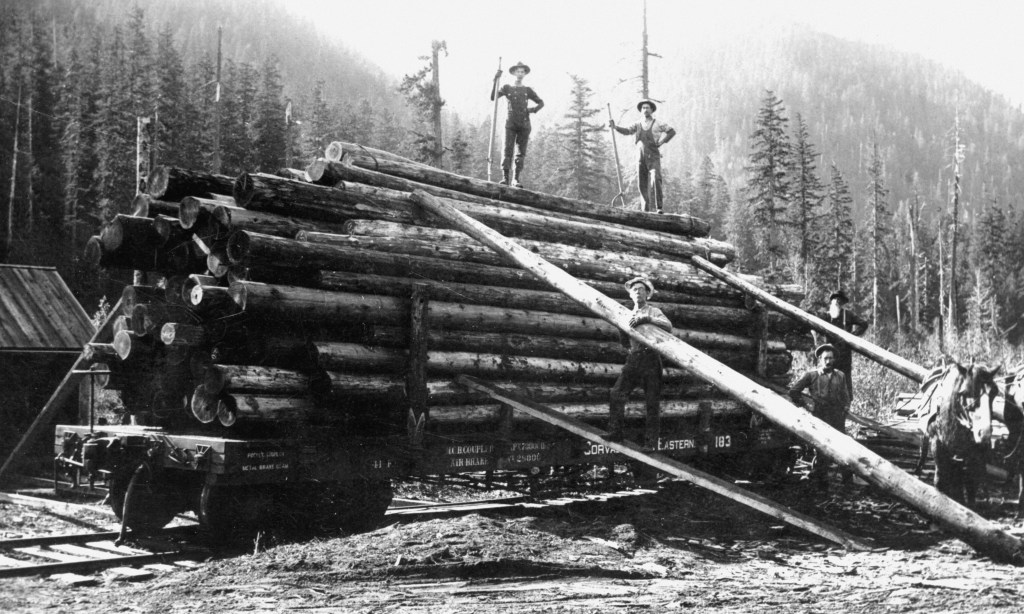
Deadhead Logging at Lake Pithlachocco Canoe Site
The extraction of submerged lumber from Lake Pithlachocco not only resulted in damage to the archaeological site but reiterated and exposed the failures in regulatory frameworks which fail to account for biodiverse lake environments, not to mention cultural heritage.
The failure of policy to distinguish between river and lake systems further demonstrates how generalized policy approaches can overlook local ecological variation and lead to unintended consequences, and the lack of inter-agency communication and absence of consultation with Indigenous communities with clearly inherent, invested interest of the site further underscores the limitations of existing environmental management approaches.
Regardless of position, there is also a shared recognition that these submerged remnants of Florida’s early timber industry are finite, as well. As extraction continues, the remaining supply of historic heartwood is rapidly diminishing, raising broader questions about resource use, conservation priorities, and the long-term consequences of treating both ecological and cultural materials as recoverable commodities.
Conclusions
The question of whether deadhead logging should be permitted in Florida’s lakes, and under what conditions, remains unresolved and deeply contested. Current regulatory frameworks reveal significant shortcomings, particularly in the assessment of ecological impacts prior to permitting.
Sampling of submerged logs has demonstrated that these structures support relatively diverse and productive wildlife communities, functioning as important habitat within aquatic ecosystems (Gallagher 2000). The removal of even a portion of the remaining logs, already limited in number, has the potential to negatively impact fish and wildlife populations. This concern is compounded by broader landscape changes: extensive terrestrial logging has reduced the availability of large trees that would naturally contribute to future woody debris inputs. As a result, many of the existing deadhead logs, some of which have remained submerged for over a century, now serve as foundational structures that support more recent ecological assemblages.
Despite this, policy responses have been uneven. While deadhead logging in river systems has faced increasing scrutiny and regulatory reform, lake environments have often been excluded from these protections (Oliverio 2024). This oversight is particularly problematic given the distinct ecological characteristics of lakes, which tend to retain materials and nutrients rather than flushing them downstream (Miller 1997; Gallagher 2000). The removal of submerged logs in such systems may therefore have more pronounced and lasting ecological consequences.
Given these considerations, there is a strong argument that deadhead logging should be prohibited in Florida’s lakes entirely, or at minimum subjected to far more rigorous environmental review and regulation. The current lack of lake-specific safeguards within existing policy frameworks highlights a broader issue in which environmental management strategies frequently fail to account for the complexity and variability of aquatic ecosystems.
This is especially pertinent to Florida environmental policy.
References
Gallagher, J.F. (2000) Governor Stops Lake Logging. Seminole Tribune. September 8, 2000.
Kenny, C. (2000) What Exactly is Deadhead Logging? Seminole Tribune. September 8, 2000.
Miller, James A. (1997) Hydrogeology of Florida. In The Geology of Florida, edited by A.F. Randazzo and D.S. Douglas, pp. 69-88. University Press of Florida, Gainesville.
Oliverio, Carmen (2024) The Collection of Historical Fossils and Deadhead Logs in Local Waters. Division of Water Resource Management/Northeast District Florida Department of Environmental Protection, Alachua County. Oct. 17, 2024.


Leave a Reply